
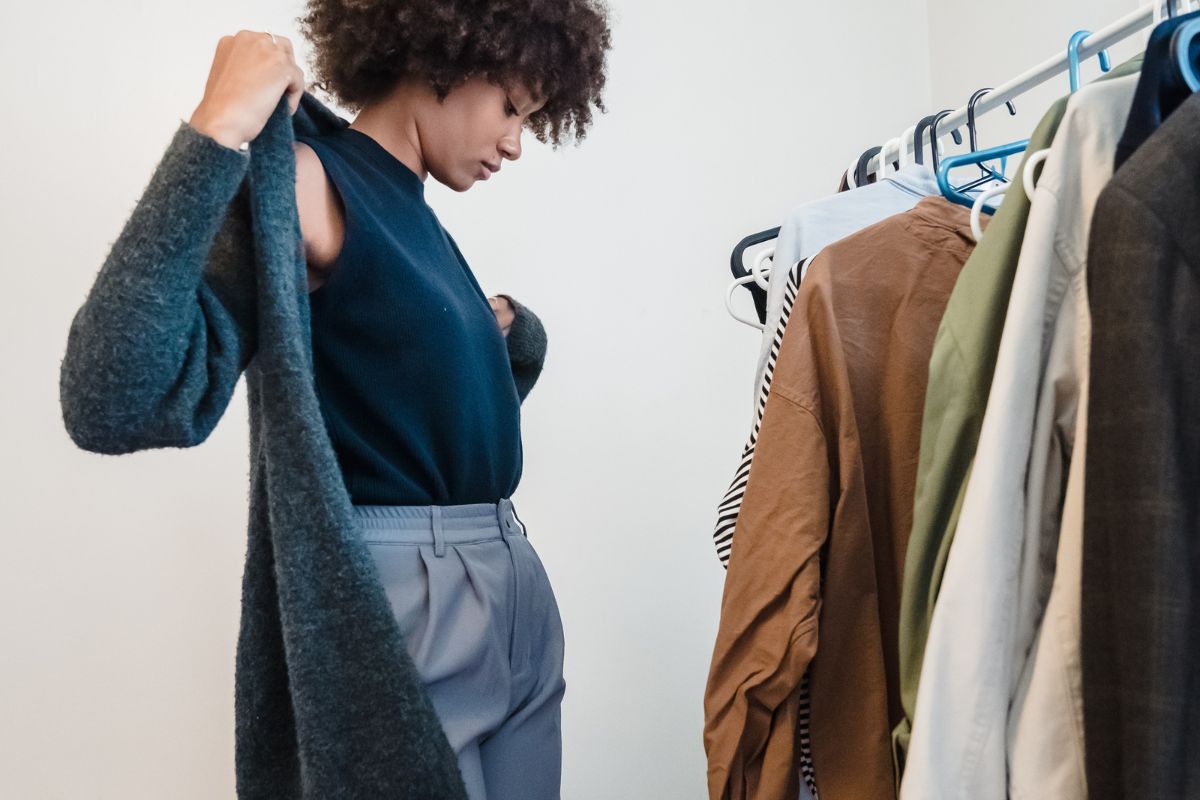

Staring blankly into a crowded closet while feeling like you have nothing to wear is rarely about a lack of clothing. It is an unsettling realization that the person reflected in those hangers no longer matches the person standing in front of them. You pull out a jacket you loved two years ago, and it suddenly feels like a costume. You try on an outfit that once felt sharp and capable, but now it feels stiff, uncomfortable, or hollow.
Losing your fashion sense is not a personal failure, nor does it mean your creativity has vanished. It almost always signals a life transition. A career change, a shift to remote work, physical changes after pregnancy or illness, moving to a new city, or simply aging out of past priorities can quietly dismantle your relationship with your wardrobe. When your daily life changes faster than your clothing collection, your style compass stops working.
The instinctive reaction is usually panic-driven consumption: browsing online sales, buying whatever an algorithm serves up, and hoping a new purchase will magically restore your confidence. It never does. Rekindling your personal style requires editing, recalibration, and intentional observation before you ever spend another dollar.
Diagnose the Root Cause of the Disconnect
Before touching a single hanger, you need to understand why your wardrobe stopped working. Most people assume they simply fell out of touch with trends, but aesthetic confusion is usually symptomatic of a deeper lifestyle misalignment.
Take a clear-eyed look at the friction points in your current morning routine:
-
Your lifestyle evolved, but your closet remained frozen. If you transitioned from a formal corporate office to a hybrid or fully remote role, eighty percent of your tailored wardrobe may now be functionally useless on an average Tuesday.
-
Your body changed, but you are dressing a memory. Weight fluctuations, posture shifts, and postpartum changes are natural, yet holding onto garments that pinch or pull creates subconscious resentment every time you open the doors.
-
Algorithmic fatigue overwhelmed your instincts. Constantly consuming rapid micro-trends on social media erodes your internal barometer. When you are exposed to twenty conflicting aesthetics a week, your brain loses track of what you genuinely enjoy versus what simply looks appealing on a stranger.
Pinpointing the exact cause of your disconnect changes the entire assignment. You are no longer trying to solve an abstract creative crisis; you are solving a practical problem of alignment between who you are today and the textiles you wrap around your body.
Clear the Visual Noise with a Reality-Based Audit
You cannot rebuild your style in a chaotic environment. When your closet is packed with items that do not fit, items with tags still attached that inspire guilt, and garments from past eras of your life, your brain suffers from visual decision fatigue.
Set aside an afternoon for a structural edit. The goal here is not to create an austere, minimalist capsule wardrobe overnight, but to strip away the emotional static so you can clearly see what you actually have to work with.
The Daily Realists
These are the garments that fit your body right now, feel comfortable against your skin, and match the activities you perform five days out of seven. They do not have to be breathtaking or avant-garde; they simply need to be functional, well-maintained, and physically comfortable. Pull these forward. They form your baseline.
The Emotional Anchors
These are the pieces that make your pulse quicken, even if you rarely have the occasion to wear them. It might be a vintage suede coat, a silk slip skirt, or a pair of sculptural boots. Even if you feel lost right now, these garments hold clues to your true aesthetic preferences. Keep them accessible, because they will serve as your creative north star during the rebuild.
The Dead Weight
Everything else must leave your immediate field of vision. This includes clothes that do not fit your current body, scratchy knits, shoes that blister your feet within twenty minutes, and remnants of previous jobs you no longer hold. If parting with them permanently feels too daunting, place them into storage bins and remove them from your bedroom. Clearing this visual clutter immediately lowers your cognitive load and eliminates daily wardrobe dread.
Establish a Calibration Uniform
When you have completely lost your intuitive sense of style, attempting to construct inventive, layered, high-concept outfits is a recipe for frustration. You need a reliable, low-stakes baseline: a calibration uniform.
A calibration uniform is a streamlined, two- or three-piece outfit formula that requires zero emotional energy to assemble, fits you comfortably, and makes you look put-together. It is not meant to be your definitive personal statement for the next decade; it is a safe harbor that allows you to function while you slowly rediscover your aesthetic taste.
Focus purely on silhouette, fabric quality, and comfort rather than color or ornamentation:
-
The relaxed architectural baseline: High-waisted wide-leg trousers in a forgiving wool blend or heavy cotton twill, paired with a fitted, heavyweight crewneck t-shirt and clean leather sneakers.
-
The tonal everyday formula: Straight-leg dark denim, an oversized crisp button-down worn open over a ribbed tank, and classic leather loafers.
-
The streamlined knit formula: A monochrome sweater and midi skirt pairing in a breathable knit fabric, worn with low-profile boots.
Commit to wearing variations of this uniform for two weeks. Notice how it feels to move through your day without the anxiety of feeling overdressed, underdressed, or disguised. By neutralizing the daily stress of dressing, you create the mental breathing room needed to think creatively about fashion again.
Curate an Analog Visual Library
Once you have stabilized your daily routine, it is time to feed your imagination again, but you must be careful about your sources. Scrolling through short-form video feeds or fast-fashion catalogs is the worst way to cure a style slump because those mediums are engineered to trigger impulsive purchasing rather than foster personal reflection.
Step away from shopping feeds and build a private, uncurated mood board. You can use a digital board or a physical sketchbook, but keep it strictly private so you are not performing for anyone else.
Collect images that provoke an immediate visceral reaction, regardless of whether they depict clothing:
-
Architecture, furniture design, and industrial materials
-
Stills from films with lighting and atmospheres you love
-
Editorial photography from past decades
-
Candid street-style captures of people moving naturally through their days
After collecting forty or fifty images, step back and analyze the recurring patterns. You might notice that every image you saved features earthy, muted tones and natural textiles like linen and untreated wool. Or perhaps you discover a strong preference for sharp, masculine tailoring, sharp lines, and minimal embellishment. These recurring patterns represent your authentic visual taste, free from commercial marketing.
Anchor Your Perspective with the Three-Word Framework
One of the most practical tools for regaining control over your wardrobe is defining your personal style through three specific adjectives. This framework turns vague aesthetic impulses into an objective decision-making filter.
Your three words should cover three distinct aspects of your style:
-
The Practical Word: Describes how your clothes must function in your actual daily life. Examples include utilitarian, relaxed, breathable, grounded, tailored, or athletic.
-
The Aesthetic Word: Describes the visual mood you naturally gravitate toward. Examples include minimalist, romantic, architectural, classic, bohemian, or vintage.
-
The Tension Word: Describes the unexpected edge that keeps your outfits from looking generic or like a uniform. Examples include subversive, whimsical, oversized, androgynous, polished, or rock-and-roll.
If your words are relaxed, architectural, and subversive, you immediately understand why a pastel floral dress feels wrong on you, even if it looks lovely on a mannequin. When evaluating an outfit in the mirror, check it against your three words. If an outfit feels incomplete, it is usually because the third word—the element of personal tension—is missing.
Document and Iterate Through the Mirror Test
Style is not a fixed identity you discover once and keep forever; it is an iterative craft developed through experimentation. The human eye struggles to be objective when looking straight into a full-length mirror because you are looking at your reflection through the filter of your insecurities, your posture, and your current mood.
To bypass this mental bias, implement the two-week photo log.
Every day before you leave the house, take a quick, full-body mirror selfie. Stand naturally and avoid posed angles. Save these photos into a private folder on your phone.
At the end of two weeks, review the photos all at once. You will be amazed at how quickly objective reality surfaces when looking at still images of yourself:
-
You will instantly spot which proportions flatter your frame and which make you look unbalanced.
-
You will identify the exact pants-to-shoe pairings that make your legs look grounded versus awkward.
-
You will notice that on the days you felt sluggish, you were wearing fabrics that felt stiff or colors that washed out your skin tone.
-
Most importantly, you will see undeniable evidence of the outfits that actually worked.
Use this photographic data to build a go-to index of successful combinations. When you feel uninspired, you do not have to invent something new; you simply open your album and choose an outfit you already know functions in the real world.
Build Forward with Ruthless Intent
When you finally feel ready to introduce new pieces into your wardrobe, do so with deliberate restraint. Never buy an item simply because it is on sale, trending, or looks great on an influencer whose lifestyle bears no resemblance to your own.
Every new addition should satisfy three strict criteria: it must fit into your calibration uniform or directly complement the three-word framework you established, it must pair effortlessly with at least three garments you already own, and it must suit the life you are living right now.
Recovering your fashion sense is not about turning into a sartorial perfectionist. It is about stripping away external expectations until what you wear on the outside feels entirely honest to who you are on the inside. When getting dressed stops feeling like a chore and begins to feel like a natural, quiet expression of self-respect, you know you have found your way back.